How to Buy a Used Electric Vehicle (EV)
When you buy a used electric vehicle (EV) you need to consider some additional elements compared to buying an internal combustion engine (ICE) vehicle.
In March 2023, I bought a red 2021 Chevrolet Bolt LT. Buying this used EV was definitely the most complicated car-buying experience of my life. I had so many more considerations in this purchase than I’ve ever had when purchasing a car: size, style, range, mileage on the car, recalls, tax incentives, features, packages, price, and taxes, oh my!
In this post, I’ll walk through the considerations I went through as I made my purchase. I explain the choices available and share why I made the decisions I did.
I hope this will help make buying your used EV just a little easier.
Considerations when Buying a Used EV
When I bought my first car in 1990, I considered the reliability, condition, mileage, and basic features. I had to promise my mom (who helped fund the purchase) that I wouldn’t let color drive my decision. Still, I ended up with a blue car!
This time around, there was so much more to consider. I’m grateful I have a pretty good understanding of electric vehicles. I’d driven across the state and back in a Bolt for work in 2019, so I have a good sense of what range means. Also as part of my former work, I’d helped track EV adoption for the state for a few years, so am pretty aware of different models commonly available.
The most challenging part of the process for me was the salespeople who didn’t know anything about EVs. Some were ignorant about tax incentives, levels of charging, and even battery recall issues. Others were so eager to share EV 101 with me that I got the low down on details I was already quite knowledgeable about.
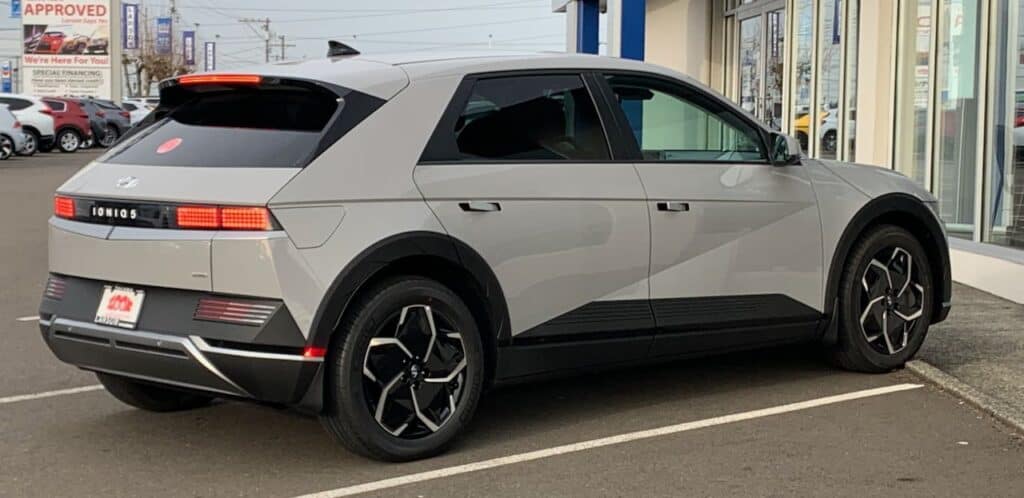
What type of vehicle do you need?
Before you buy any vehicle, of course, you want to have an idea of the type of vehicle you need. Do you run a farm and need a pickup? Are you operating mom’s taxi and hauling your kids and their friends around town? Are you single and have a long commute? Are you planning, like me, to make some long road trips?
EVs come in various sizes and styles, but not all options are available… yet.
My Process
I really want a minivan – something large enough for road trips that I can sleep in regularly and carry my gear, but not so huge that it’s difficult to drive (or overly expensive). Sadly, there are not any electric minivans available at this time
My criteria
- Size and shape – can I sleep in it and carry my stuff?
- Range – as much as possible, please
- Price – don’t spend any more than necessary and take advantage of incentives
- Safety – I want the safety features of newer cars
- Availability – can I get now or soon?
Plan A
I thought a small SUV might work, so went out and drove every vehicle I could find. I measured the interior – long enough for sleeping? I climbed in the back – what would it be like to hang out there? Here are the vehicles I saw:
- VW ID 4
- Nissan Ariya
- Kia EV6
- Hyundai Ionic 5
These four vehicles were all very similar and I was disappointed with the shape of the back of all of them. Rather than a boxy back, the back is angled, greatly reducing the headroom when sitting in the trunk area. Sure, I could make it work, but I didn’t want to spend $50,000 or more on a vehicle that wasn’t perfect. On to Plan B…
Plan B
Still, I really wanted to start traveling electrified … after all, if I’m going to blog about it, it would help actually to be doing it!
If I couldn’t get exactly what I wanted, then what was the least expensive option that I can make work? A Chevy Bolt fit that ticket. It won out over the Nissan Leaf because of its longer range. The Bolts have 60-66 kWh batteries; the Leafs, 40 kWh. For the traveling I want to do, maximizing range is important.
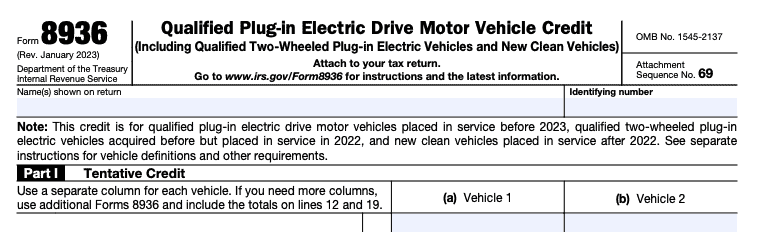
Federal Tax Incentives for buying EVs, new and used
Before jumping into other vehicle considerations, it’s important to understand the landscape of EV tax incentives.
DISCLAIMER – I am not an accountant and am definitely not your accountant. Personal finances are personal and the rules for incentives are changing. Do your own research and consult an accountant to understand how these incentives fit your situation.
The Inflation Reduction Act of 2022 restructured federal tax incentives for EVs. These incentives apply to all EVs that fall within set price limits and are available for both new and used vehicles. Buyers must also meet income limits.
Used electric vehicle federal tax incentives
Used EVs at least two years old with a purchase price of no more than $25,000 are eligible for a federal used clean vehicle credit of $4000. The IRS also publishes a list of eligible vehicles. There are also income limits for buyers.
New electric vehicle federal tax incentives
The new electric vehicle incentives are more complicated than those for used vehicles. The incentive requires new vehicles to undergo final assembly in North America. Find current information in several places online:
- The Department of Energy’s website includes information on how to determine the assembly location of individual vehicles.
In addition, in March 2023, the Department of Treasury is scheduled to establish additional guidance on the critical mineral and battery component requirements. This could reduce the tax incentive on some vehicles.
How do EV tax incentives work? Or, how do I get my money?
These tax incentives are a direct reduction in the taxes you owe, not a deduction of your taxable income (no itemization needed). This means that to fully benefit from the incentive, you need to owe at least as much in taxes as the incentive. In other words, next year, when you file this year’s taxes, you’ll see a reduction in your tax liability. You cannot carry over the exemption to future years.
For example, if I buy a car in 2023. I’ll see the reduction when I file my 2023 taxes in the spring of 2024. Either I’ll get a bigger refund, or I can plan my tax payments this year to be less.
State Tax Incentives
A number of states have additional incentives available to their residents to encourage the purchase of EVs. For example, in my state, Washington, EVs are sales tax exempt (up to a point); various limits apply to new and used vehicles. You’ll need to research the specifics for your state.
If your state doesn’t yet have incentives, consider contacting your legislators and governor and asking that they establish them!
My Process
Initially, I thought I would buy a new vehicle, so was moving quickly to purchase before the rules change. For Bolts, the new vehicle incentives brought the price down to about the same as a newer used vehicle.
I also figured out that I needed to purchase my vehicle in Washington or in a state with no or very low sales tax to take advantage of the sales tax exemption.
Should I buy a new or a used EV?
Deciding up front whether you will buy a new or used EV will help narrow your search process.
Why buy a new EV
Some good reasons to consider a new vehicle include
- Full warranty
- Knowing the complete history of a vehicle – including the battery
- Access to brand new models – to me, this is the most compelling reason to buy a new EV
- Less work than buying used – you don’t have to investigate the history of each individual vehicle
Why buy a used EV
Used vehicles are typically less expensive, and, with some due diligence, you can find excellent vehicles. Some reasons to consider used vehicles:
- Less expensive – the main reason I bought used
- Availability – You’re looking at what’s in stock now, so you don’t have to wait for something on order
My Choice – Buy a Used EV
I chose to buy a used vehicle because the vehicle I want didn’t exist and I wanted to reduce my cost of getting into an EV. With tax incentives at the time of my purchase, a new vehicle at MSRP would have been about the same price, but all the new cars had a “market adjustment” – some as much as $5,000.
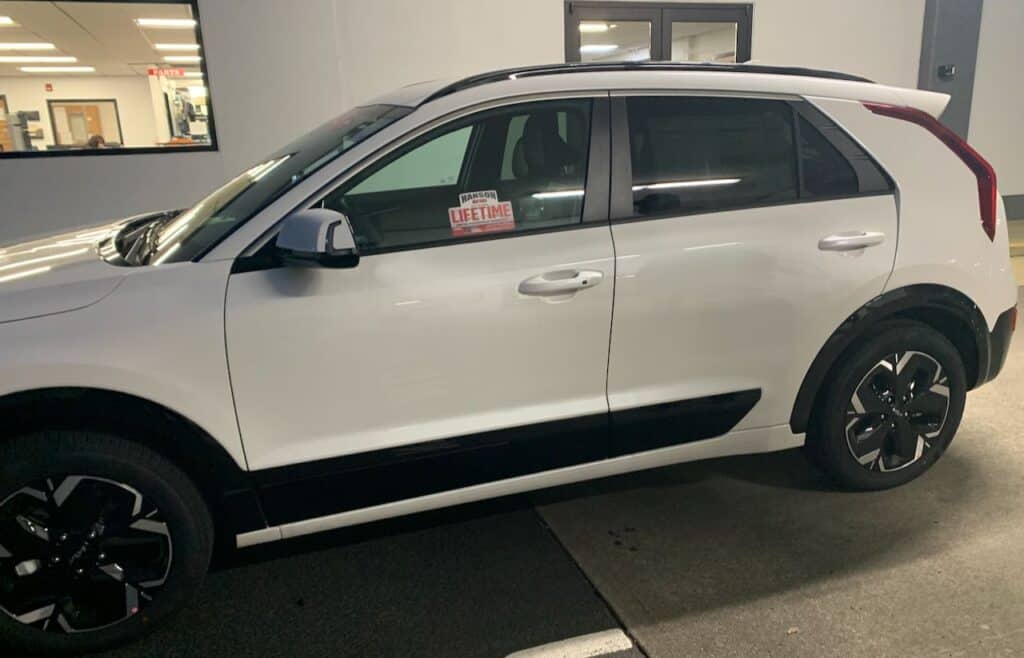
Where to Purchase
Back when I purchased my first car, I went through the local paper’s classified ads every day looking for vehicles. That’s not how the world works anymore. This time, I sat at my desk and could look at cars across the country.
Purchase EV locally
The advantages of purchasing locally are that you can go see the exact vehicle you are going to buy, kick the tires, test drive, look it over, and even take it to a mechanic for a once over. However, unless you live in or near a large city, there is probably a limited selection of vehicles to choose from.
Tip: Let the local dealership know what you are looking for so if they get something that meets your criteria, they can alert you.
Purchase EV out of state
With today’s technology, it is possible to easily see cars for sale across the country. It creates a couple of challenges, but there are tools to manage them.
Tips for purchasing a car out of state:
- Test drive near home – Make sure you drive the make and model of car you plan to purchase before you buy. In your vehicle search, find a local car to do that. When I bought a car about 20 years ago, I had it narrowed down to one of two models – I made the final decision because I had better visibility out of one. I wouldn’t have known that without driving the vehicles.
- Check out the warranty – In the past, I’ve always taken a car to a mechanic for a once over, but at a distance, this is hard to do. Having a warranty can help with any unforeseen repairs. Also, in an EV, there are fewer moving parts.
- Getting the car home – you have a choice of going to the car and driving it home yourself or having it delivered. Each has costs associated with it. Find out what those are.
My choice
Because I want to take long road trips, I was willing to go just about anywhere to get a car, although, it would probably be hard to drive home from Hawaii. 😉
I found a very promising car in California and was excited to make an offer when the salesperson let me know that if I were to pick up the car, I would need to pay the local 10.25% sales tax. Suddenly it dawned on me that I wouldn’t be able to use my state’s sales tax exemption if I paid CA sales tax.
Having the car delivered would have cost a little less than the sales tax, but still was an expense I didn’t want to pay. I found a list of states with low or no sales tax and figured out which ones would leave me paying enough sales tax in WA that I could take advantage of the full sales tax exemption when I registered the vehicle at home.
In the end, I found my car in Portland, OR – no sales tax and close enough to easily get to.
Features to Consider in an EV
Pretty much every vehicle comes in a variety of “trim lines” and has optional feature “packages” leading to a myriad of combinations. Understanding the different trim lines and packages can help you narrow your list of potential cars.
In EVs, trim lines can include different battery sizes in some EVs – and this can change between model years – as can the ability to charge on Level 3 chargers.
The most reliable source of info on car features that I found was the original window sticker – often available through Carfax.
My Choices
- Level 3 charging – past model years of the Bolt offered a based model that was only capable of Level 2 charging. Level 3 charging was a must for me so I can use Level 3 fast chargers when I am away from home. Surprisingly, I found salespeople who didn’t seem to know what I was asking about when I asked if a specific vehicle was capable of Level 3 charging.
- Driver Comfort and Convenience – I live in Washington State where we have this thing called winter – it gets cold outside. This package is basically heated seats and a heated steering wheel. This was a must for me because it is much more efficient to heat those elements rather than the whole interior of the car, thus increasing the range when the heater is turned off.
- Safety – There were two additional packages of safety features. My preference was to have both of them, but they were not a deal breaker for me. In the end, the car I purchased does have both, and I’m glad.
- Infotainment – A fancy stereo system wasn’t important to me and I was not willing to pay for it. It’s not in the car I purchased.
Battery Considerations in a Used EV
Once you’ve decided on the make, model, age, mileage, and other features, it’s time to start looking seriously at individual vehicles. In addition to considering the usual criteria, like condition of the vehicle, there are some additional considerations for an EV.
Are there any recalls open?
Search for open safety recalls on the National Highway and Transportation Safety Administration (NHTSA) recall website. Make sure that open recalls with a remedy are taken care of or that you get them fixed right after taking possession of the vehicle. While this generally goes for any used vehicle, for the Chevy Bolt, this is a big issue right now. These vehicles have been recalled for battery replacements, but it is taking time to address all the cars; in the meantime, there are limitations on charging.
I found some dealerships that would not (could not?) sell vehicles that did not have the replacement made. And, dealership vehicles are at the bottom of the list for getting fixed. Some dealerships hold vehicles with deposits until the replacement us completed, then release to buyers. The wait can be a few months.
What is the condition of the battery?
Batteries last the best when they are maintained between 20 and 80% of their full charge. High heat can also impact battery life.
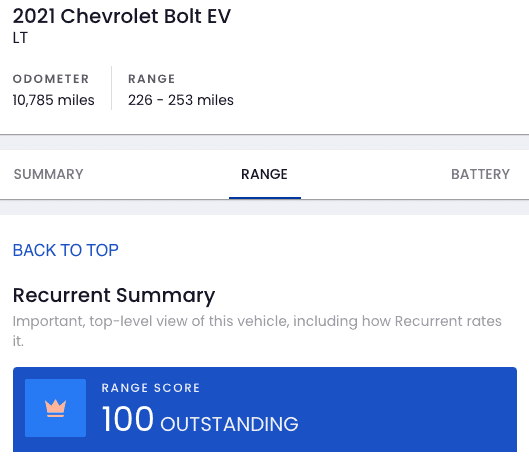
While looking for vehicles, I came across the Recurrent website. They note that “Today the health of an electric vehicle battery is a black box. Recurrent is working to change that by collaborating with thousands of EV drivers and introducing advanced machine learning.”
As a shopper, you can enter a VIN on their website and score your batteries. I don’t know anything more about how they are calculating the score, but I did see some differences between vehicles.
My Choices
In my case, the recall is worked in my favor – my car has not yet had the recall work completed. Once it is done, I’ll have a brand new battery pack that I know the full history of. In the meantime, which may be a few months, GM has established charging guidelines that include stopping at 80% charge and not charging indoors or overnight. I’m not driving a lot right now, so that’s not a problem.
I didn’t really use the battery score to differentiate between vehicles. The scores were similar between the vehicles I was considering. I did notice a difference between older vehicles with more miles and newer vehicles with fewer miles. It wasn’t clear to me if the score took into account the battery replacements that are happening because of the Bolt Recall program.
Who to buy an EV from
It is my perception that more and more, the used vehicle market is through dealerships. When I was looking, there just weren’t used Bolts available on the private market. I suspect part of this is due to lease returns feeding the age range of vehicles I was interested in.
My process
All but one of the vehicles I seriously considered were at dealerships and my final purchase was through a dealership. That said, I did not trade in my current vehicle and am selling that privately.
Bringing home your EV
Once you’ve picked out a vehicle, it’s time to fork over the money, sign the papers, and drive it home. Congratulations on buying an electric vehicle!!
A couple of things happened when I was at the dealership that are worth pointing out.
Is the vehicle adequately charged?
When you get to where you are about to walk out the door, make sure the vehicle has enough charge to get you home. If you are buying in the immediate area where you live, this shouldn’t be a problem. But if you have a longer drive home, make sure you have enough charge or have a plan for getting it charged on your way.
The car should come with a charging cable
Make sure the car has a charging cable in it. This will allow you to plug it into any 110 outlet and can be especially useful if you don’t have a dedicated charger at your home.
My new car!
I walked to the bus station, took the bus to Portland, then walked to the dealership to pick up my new-to-me car. They had it parked out front when I arrived.
I found the sales associate I was working with; the first thing we did was take a short test drive. I’d already driven Bolts, but it was good to take the car I was buying for a quick spin.
While we were out, I noticed the car only had about 90 miles of range on it. The drive home is about 110! I asked if they have a Level 3 charger – no. But we did put it on the Level 2 charger for about 90 minutes while we completed the paperwork. When I left, it had about 125 miles on it. Still not quite enough, but I knew where there was a free Level 2 charger on the way home and planned to make a stop there.
One of the first pieces of paperwork I had to sign was an acknowledgement that I was accepting the vehicle in its current condition, with no other bits and pieces coming. My immediate thought was that I hadn’t seen a charge cord in the car. We went out and double checked, sure enough, none there. The manager found one they had ordered for another customer that they could let me have.
With those bullets dodged, I sat through several offers of extended warranties and signed page after page. Once we were done, they brought the car around and I headed home!
Tips For Buying an Electric Vehicle
🚗 Keep a trip log
- If you are not sure if an EV is right for you because of range issues, keep a log of your trips for a week, month, or longer.
- How often do you make trips that are longer than one charge?
- If you often take longer trips, consider the charging options along the way.
🚗 Take your time & do your research
- For most of us, electric vehicles are new. Learn more about them
- Go drive one – at a dealership or a community ride-and-drive event
- Learn about the incentives available and how they work with your financial situation
- Learn about charging options, at home and on trips
🚗 Be ready to jump
- Goodness knows the car market has been crazy lately, so once you have your ideal vehicle in mind, be ready to act quickly when it comes available
🚗 Final questions
- Before you go pick up the vehicle, ask them to have it fully charged when you arrive
- Confirm that there is a charging cord before you sign the paperwork
FAQ: Buying an Electric Vehicle
Do you get a tax credit for buying a used EV?
Maybe – substantial federal tax credits can make an EV more affordable. Check to see if your state offers additional incentives. Check what it takes to qualify for incentives – some have limitations: vehicle cost, buyer income, and vehicle features.
What is the average lifespan of an EV?
According to JD Power, vehicle batteries will typically last between 10 and 20 years. Manufacturers tend to have long warranties on batteries (8 years on a Chevy Bolt). In general, older electric vehicles are showing that batteries are lasting well past the warranty periods.
Is buying a used EV a bargain or a trap?
Probably neither. Vehicles tend to be priced according to their perceived value. Used EVs are less expensive than new ones, but that’s normal for cars.
Is it worth buying an EV now?
Generally, yes. While EV prices are likely to come down (at least relatively) in the coming years, federal and state tax incentives to drop the purchase price and lower ownership costs make EVs a good fit for many drivers.
How much does a used EV cost?
From less than $10,000 to well over $100,000, depending on the make, model, age, condition, range, and other features.
What is the best EV to get?
Again, it depends on your needs.
Why is it so hard to buy an EV?
Oh, the reasons! Limited stock due to manufacturing constraints and supply chain issues, lack of knowledge of dealerships, spotty incentives for dealerships to stock them, and demand are some issues currently challenging the EV market.
What is the real cost of owning an EV?
While EVs do cost more upfront, they have lower ongoing costs. If you mostly charge at home, electricity costs less than gas. In addition, the added benefit of reduced maintenance costs (no oil changes) saves money. And, regenerative braking saves on brake pads.
Conclusion: Buying an electric vehicle
Now is as good a time as ever to buy an EV, new or used, and traveling electrified. Buying a car is never easy, but with some research and tenacity, you can join the revolution!